Dental Implants in Cedar Hills, Portland, OR
A missing tooth does more than change your smile. Over time, the jawbone beneath the gap begins to shrink, nearby teeth drift out of place, and biting and chewing become harder work than they should be. Dental implants in Cedar Hills stop that chain reaction before it starts, replacing the tooth root and the visible crown so your mouth functions the way it was meant to. At Elite Dental Care, Dr. Zavari brings more than 20 years of dental experience to every consultation, the practice welcomes new patients, and we are in-network with Delta Dental, Moda, and many other major insurance plans.
Why Dental Implants Are the Gold Standard for Tooth Replacement
Ask most dentists which tooth replacement option they would choose for themselves, and the answer is almost always an implant. For patients in Cedar Hills and the broader Portland area, implants offer something bridges and dentures simply cannot: a replacement that lives in the bone, not just on top of it.
How Implants Work: A Permanent, Bone-Preserving Solution
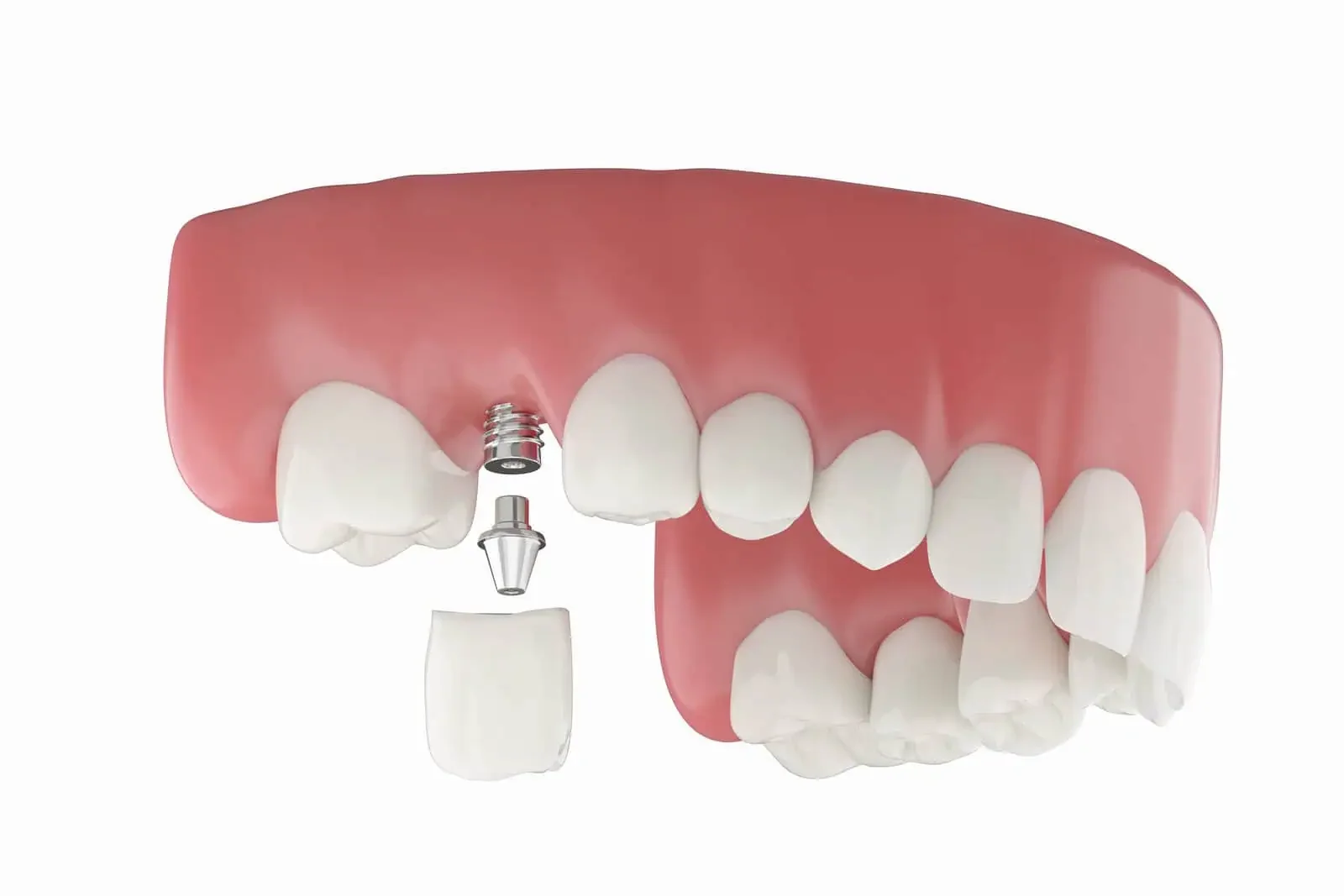
A dental implant has three parts. First, a small titanium post is placed into the jawbone. Over the following weeks, the bone grows around and bonds to that post in a process called osseointegration, which means the implant becomes part of your jaw. Once that bond is solid, a connector piece called an abutment is attached, and finally a custom dental crown is placed on top. The result looks, feels, and bites like a natural tooth, and it stimulates the jawbone the same way a natural root does, which keeps the bone from shrinking.
Who Is a Good Candidate for Dental Implants?
Most adults with one or more missing teeth are worth evaluating. Good candidates generally have:
- Adequate bone density to support the implant post
- Healthy gums with no active periodontal disease
- A commitment to daily brushing and flossing
- No uncontrolled health conditions that could slow healing
If bone loss is present, a graft may be recommended first. Dr. Zavari takes a conservative approach: she will only recommend treatment that genuinely serves your long-term health, and she will explain every step before anything is scheduled.
Implants vs. Bridges and Dentures: Which Is Right for You?
Not every patient is an implant candidate right away, and some situations call for a different path. Dental bridges and dentures are both proven options for replacing missing teeth. Here is how the three compare across the dimensions most patients ask about:
| Feature | Dental Implants | Dental Bridges | Dentures |
|---|---|---|---|
| Longevity | Designed to last many years, often a lifetime | Typically 10-15 years with good care | 5-10 years before refitting is common |
| Bone preservation | Yes, stimulates the jawbone | No, bone loss continues under the gap | No, bone loss continues under the appliance |
| Adjacent teeth affected | None | Yes, neighboring teeth are prepared and crowned | No |
| Maintenance | Brush and floss like natural teeth | Standard hygiene plus flossing under the bridge | Removal and daily cleaning required |
| Feel and function | Closest to a natural tooth | Fixed and stable, but less bite force than implants | Can shift or require adhesive; softer foods often preferred |
| Typical cost range | Higher upfront investment | Moderate | Lower upfront, higher long-term replacement cost |
For patients who want the most permanent, bone-preserving solution and meet the candidacy criteria, implants are usually the strongest long-term choice. If cost or bone volume is a current barrier, Dr. Zavari will discuss which option fits your situation today and what a path toward implants might look like over time.
What to Expect: Your Dental Implant Process at Elite Dental Care
Implant treatment is not a single appointment, and knowing the timeline helps remove a lot of the uncertainty that makes patients hesitant to start.
Step-by-Step: Consultation Through Final Restoration
The process generally follows these stages:
- Consultation and imaging: Dr. Zavari reviews your health history, takes digital and panoramic X-rays, and uses 3D scanning to map your bone structure precisely
- Treatment planning: You receive a clear, written plan with each step explained before anything is scheduled
- Implant placement: The titanium post is placed under local anesthesia in a straightforward in-office procedure
- Healing period: The implant bonds to the bone over several weeks to a few months, depending on your biology
- Abutment and crown placement: Once healing is confirmed, the connector and final custom crown are placed, completing your new tooth
Recovery, Healing Time, and What Our Patients Experience
Soreness and mild swelling in the first few days after placement are normal. Most patients return to regular activities quickly. Dr. Zavari's team will give you specific care instructions and check in with you throughout the healing period. The conservative, no-rush approach here means you will not be pushed to the next step until your body is ready.
What Happens If You Leave a Missing Tooth Untreated?
It is tempting to put off replacing a tooth, especially one toward the back of the mouth where no one can see it. But leaving a gap untreated sets off a slow chain of problems:
- The jawbone in the empty space begins to shrink within the first year
- Neighboring teeth gradually tilt and drift toward the gap
- Opposing teeth may over-erupt, shifting the bite out of alignment
- An uneven bite puts extra pressure on remaining teeth and jaw joints
- Bone loss and shifting teeth make future implant placement more complex and costly
Addressing a missing tooth sooner generally means a simpler, less expensive path than waiting. Our restorative dentistry team is here to help you understand all your options without pressure.
Dental Implant FAQs
Are dental implants covered by insurance?
Many dental insurance plans offer at least partial coverage for implants. Elite Dental Care is in-network with Delta Dental, Moda, ODS, Blue Cross Blue Shield, MetLife, Aetna, Cigna, United, Providence Health Plan, Guardian, and Assurant. Financing through CareCredit and LendingPoint is also available. See our Insurance and Financing page for a full breakdown.
How long do dental implants last?
With good daily hygiene and regular dental visits, implants are designed to last many years and often a lifetime. The crown on top may need replacement after a decade or more of normal use, but the implant post itself is built to be a long-term solution.
Is the implant procedure painful?
Most patients are surprised by how manageable the process feels. The placement is done with local anesthesia, so you should not feel pain during the procedure itself. Mild soreness afterward is normal and typically eases within a few days.
Can I get implants if I have bone loss?
Bone loss does not automatically disqualify you. A bone graft may be recommended first to rebuild the area and give the implant a stable foundation. Dr. Zavari will evaluate your bone density at your consultation and walk you through all available options before any decision is made.
How do I know if I'm a candidate for same-day or immediate implants?
Immediate implant placement, where the post is placed the same day a tooth is removed, is possible for some patients depending on bone quality and overall oral health. Dr. Zavari will review your X-rays and 3D scans at your consultation to determine which timeline makes the most sense for you.
Ready to Replace That Missing Tooth for Good?
A gap in your smile does not have to be permanent, and getting answers costs nothing but a conversation. Dr. Zavari will walk you through your options honestly, without pressure, and help you decide what fits your health and your life.